Please fill out the form below to request a quote or to request more information about us. please be as detailed as possible in your message, and we will get back to you as soon as possible with a response. we're ready to start working on your new project, contact us now to get started.
How To Select The Right Sludge Dewatering Machine For Textile Wastewater
2026-10-20
DUBHE
32
Navigating the complexities of textile wastewater management can be a daunting task, particularly when it comes to choosing the right sludge dewatering machine. With a multitude of options available in the market, how do you ensure you're making the best choice for your specific needs? Whether you're a facility manager seeking to enhance operational efficiency, an environmental consultant aiming to meet regulatory requirements, or a textile manufacturer looking to reduce waste treatment costs, selecting the appropriate dewatering technology is crucial. In our comprehensive guide, "How to Select the Right Sludge Dewatering Machine for Textile Wastewater," we break down the factors you need to consider, from the characteristics of your sludge to the latest innovations in dewatering technology. Join us as we explore how to make an informed decision that not only meets your operational demands but also contributes to sustainability in the textile industry. Dive in to discover expert insights and practical tips that will empower you to optimize your wastewater treatment processes!
1. Characteristics of Textile Sludge and Dye Residu
Characteristics of Textile Sludge and Dye Residue
Textile Sludge Properties
Textile sludge is characterized by its high organic content, often comprising cellulose, proteins, and synthetic fibers. One of the most significant challenges presented by textile sludge is its variability in composition, which can fluctuate based on the types of dyes and chemicals used in the dyeing process. The sludge typically has a high moisture content, often exceeding 90%, which can inhibit efficient handling and disposal. Additionally, the presence of dyes in the sludge impacts its color and toxicity, presenting challenges for treatment and stabilization.
The particle size distribution of sludge varies widely, with some particles being large and fibrous while others are significantly smaller. This variance complicates the flocculation and sedimentation processes, necessitating careful consideration when selecting a sludge dewatering system. Furthermore, the rheological properties of textile sludge—such as viscosity and shear-thinning behavior—play a critical role in the performance of sludge dewatering machines. Understanding these characteristics can lead to improved mixing, pressing, and dewatering processes.
Polymer Flocculation Optimization
To enhance the dewatering process of textile sludge, the role of polymer flocculation cannot be overstated. Polymers are used to agglomerate fine particles, facilitating their separation from water during the dewatering phase. Proper optimization of polymer dosing is crucial, as overuse or underuse can significantly affect the quality of the dewatered sludge cake. Achieving the right balance involves conducting jar tests where varying concentrations of polymer are added to the sludge sample to observe the formation of flocs.
The efficiency of a polymer in flocculating textile sludge is influenced by factors such as the chemical nature of the sludge, pH levels, and temperature. In practice, cationic polymers are often preferred due to their positive charge, which helps neutralize the negatively charged particles present in the sludge. Optimization may additionally involve using a combination of different polymer types to achieve desired floc sizes and densities, thereby increasing the overall efficiency of the sludge dewatering machine.
Sludge Cake Dry Solid Target
Setting appropriate targets for the dry solid content of the dewatered sludge cake is essential for optimizing disposal and reuse options. The goals typically range from 15% to 45% dry solids, depending on the specific context of sludge disposal or further treatment. A higher dry solids content equates to reduced transportation and disposal costs, while a lower moisture content can lead to easier handling, incineration, or potential reuse in applications such as landfill cover.
Achieving the desired dry solids content is a key indicator of the efficiency of the sludge dewatering machine. Advanced systems like screw presses are known for their capability to achieve high levels of dry solids due to their continuous operation and adjustable pressure settings. Understanding how different machinery can achieve these targets is vital, as some systems may excel in producing higher quality sludge cake, while others may be more suited for different operational conditions.
Equipment Wear Resistance
A critical consideration when selecting a sludge dewatering machine is its wear resistance, particularly due to the abrasive nature of textile sludge which often contains hard fibers and other solid materials. Machinery that lacks sufficient wear resistance may suffer from reduced operational efficiency, increased costs of maintenance, and a shorter lifespan.
Selecting equipment that utilizes durable materials and advanced engineering techniques can significantly mitigate wear issues. Stainless steel and specially coated components are often recommended for their robustness against the corrosive and abrasive properties of textile sludge. Moreover, regular maintenance and monitoring of the sludge dewatering machines will ensure long-term operational reliability, optimizing both performance and economic feasibility.
In conclusion, the characteristics of textile sludge and dye residue play a crucial role in determining the appropriate systems and methodologies for effective wastewater treatment. Understanding these properties helps industry operators make informed decisions that enhance the performance and longevity of their sludge dewatering processes.
2. Screw Press vs. Centrifuge for Fiber-Rich Sludge
The treatment of textile wastewater generates significant amounts of textile sludge, which is rich in fibers, dyes, and other complex organic materials. As the textile industry strives to minimize environmental impact and adhere to stricter regulations, efficient sludge dewatering solutions become essential. The choice between a screw press and a centrifuge for dewatering fiber-rich sludge hinges on several factors, including sludge properties, polymer dosing optimization, equipment wear resistance, and desired sludge cake dryness.
Textile Sludge Properties
Textile wastewater sludge typically contains a combination of organic materials, fibers, and inorganic compounds, giving it unique physical and chemical properties. The high fiber content, often derived from cotton, polyester, or other synthetic materials, not only complicates the dewatering process but also affects the performance of dewatering machinery. The weight and composition of this sludge can vary depending on the type of textile process employed and the chemicals used throughout the treatment process. The fibrous nature leads to lower settling rates and higher moisture content, making effective dewatering techniques critical.
Polymer Flocculation Optimization
To enhance the dewatering performance of both screw presses and centrifuges, polymer dosing is vital. Polymers act as flocculants, promoting the aggregation of suspended solids into larger flocs, which can easily be removed during the dewatering process. The optimization of polymer dosage is critical, as the wrong amount can lead to poor performance and increased operational costs.
In practice, different types and concentrations of polymers are tested to determine their effectiveness in reducing moisture content in the sludge. For example, cationic polymers are commonly used due to their affinity for negatively charged particles present in textile sludge. Proper tuning and calibration of the polymer dosing system ensure that the right amount is applied to achieve the targeted sludge cake dry solid percentage, maximizing the efficiency of the dewatering processes.
Sludge Cake Dry Solid Target
Achieving a specific solids content in the sludge cake is an essential goal for any dewatering operation. The dry solid target for textile sludge is typically set above 20-30% solids, as higher dryness translates to reduced transportation and disposal costs. The choice between screw presses and centrifuges significantly affects the ability to meet these targets.
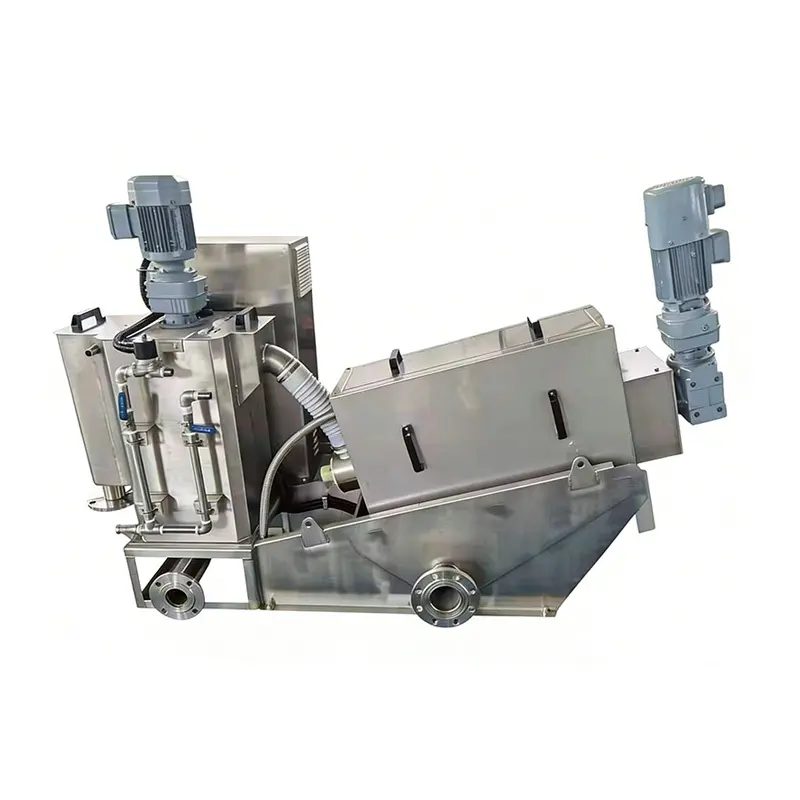
Screw presses are generally more suitable for handling fiber-rich sludges. They operate on a continuous basis with lower energy consumption and are capable of generating a dewatered cake with a higher solids content as compared to centrifuges. It is essential to adopt an optimal feeding rate and operating pressure to ensure consistent performance. In contrast, centrifuges, while capable of producing high solid contents, may require additional energy and maintenance, especially when processing fibrous sludge, where the risk of clogging and wear can increase.
Equipment Wear Resistance
Another critical consideration when selecting between a screw press and a centrifuge for textile wastewater sludge dewatering is equipment wear resistance. The abrasive nature of fiber-rich sludges poses a significant threat to the longevity and performance of dewatering machines.
Screw presses are generally designed with robust materials resistant to wear from fibrous materials. Their slow rotational speed minimizes shear forces, reducing the likelihood of damage over time. Conversely, centrifuges face greater challenge due to their high-speed operation, leading to increased wear, particularly on the components that come into contact with fibrous materials. Regular maintenance and potential replacement of wear parts can add to operational costs, making it important for facilities to calculate the life-cycle costs associated with each technology.
In the battle of screw press versus centrifuge for dewatering fiber-rich textile sludge, the choice is not merely about efficiency but also about the long-term sustainability and economic viability of the operation. By carefully considering the properties of textile sludge, optimizing polymer dosing, targeting dry solids content, and assessing equipment durability, textile manufacturers can select the right sludge dewatering machine that not only meets regulatory demands but also aligns with broader sustainability goals. With the right technology in place, textile industries can effectively manage wastewater treatment while minimizing waste generation and resource consumption.
3. Flocculant Selection and Polymer Dosing Rates
When dealing with textile wastewater, one of the most critical stages in the treatment process is the effective management and dewatering of the resulting sludge. Textile wastewater sludge often contains various contaminants, including dyes, heavy metals, and other organic and inorganic materials that complicate the treatment process. To optimize the dewatering process and achieve a high-quality sludge cake, flocculant selection and polymer dosing rates are pivotal. The right choice of flocculant, paired with accurate dosing, can significantly enhance the performance of sludge dewatering machines like screw presses.
Understanding Textile Sludge Properties
The characteristics of textile sludge can vary widely depending on the type of textiles processed and the chemicals involved in the dyeing and finishing processes. This sludge typically exhibits a high water content and a complex composition, which can hinder effective dewatering. Some common properties include high viscosity, a negative charge due to the presence of surfactants, and a tendency to form stable emulsions. These properties necessitate a tailored approach to polymer selection and dosing to ensure optimal flocculation and separation during the dewatering phase.
Polymer Flocculation Optimization
The optimization of flocculant selection and polymer dosing is critical in enhancing the efficiency of sludge dewatering machines. The primary function of a flocculant is to facilitate the aggregation of fine particles within the sludge, allowing for easier removal of water during dewatering. Anionic, cationic, and non-ionic flocculants are typically considered, but selecting the correct type hinges on the specific characteristics of the sludge.
For instance, cationic polymers are often effective for textile sludge due to their positive charge, which helps neutralize the negative charges of the sludge particles. This charge neutralization enhances particle agglomeration and leads to larger flocs, which can be easily separated during the dewatering process. Therefore, conducting jar tests to evaluate different polymers and their concentrations is a recommended practice to find the most efficient formulation for a specific textile wastewater application.
Moreover, the molecular weight and charge density of the polymer have a substantial impact on flocculation efficiency. High molecular weight polymers typically enhance the bridging effect, which can significantly contribute to improved sludge floc size. However, an overdosage of polymer can lead to poor dewatering performance and may even result in an increase in residual water content, negatively impacting the overall efficiency of the dewatering process.
Sludge Cake Dry Solid Target
Another vital consideration in the polymer dosing process is the target for the dry solid content of the sludge cake. The objective of sludge dewatering is not only to reduce the volume of the sludge but also to achieve a certain percentage of dry solids to ensure the cake's transportability and disposal. Typically, achieving a sludge cake with a dry solid content of 20-30% is acceptable for many applications, including landfilling, incineration, or further treatment for bioenergy production.
Maintaining the appropriate polymer dosing will directly influence the resulting sludge cake quality. Dosing rates must be calibrated to target the desired dryness without sacrificing floc size or structural integrity, which could lead to lower cake solids content.
Equipment Wear Resistance
Selecting the appropriate flocculant and dosing rates is not solely about optimizing the dewatering efficiency but also about minimizing equipment wear. The continuous operation of sludge dewatering machines, particularly screw presses, often involves the processing of highly abrasive materials, including fibers and particulate matter from textile manufacturing. An improper mix of chemicals or over-concentration of polymers can exacerbate wear in the machinery, leading to increased maintenance costs and downtime.
To mitigate wear and extend the lifespan of the equipment, operators should consider employing wear-resistant materials in constructing essential components such as screens and augers. By combining robust flocculant selection with equipment resilience, textile manufacturers can ensure a more sustainable and efficient dewatering process.
In conclusion, the careful selection of flocculants and the precise adjustment of polymer dosing rates are critical components in optimizing the dewatering of textile wastewater sludge. Considering factors like sludge properties, optimization of flocculation, targets for dry solids, and potential equipment wear can significantly enhance the performance of sludge dewatering machines like screw presses, ensuring effective treatment of textile wastewater.
4. Managing High Chemical Oxygen Demand (COD) in Filtrate
The management of Chemical Oxygen Demand (COD) in textile wastewater is critical for ensuring that the treated effluent meets environmental standards and minimizes ecological impact. The textile industry is notorious for generating substantial amounts of sludge, which contains various contaminants, dyes, and organic materials, all contributing to elevated COD levels in the filtrate. Appropriate selection of sludge dewatering machines, such as screw presses, coupled with effective polymer dosing, is fundamental in mitigating COD while optimizing the management of textile sludge.
Understanding Textile Sludge Properties
The characteristics of textile sludge are notably complex. Composed of fibers, dyes, and chemicals utilized during production processes, this sludge exhibits high organic content, leading to increased COD levels. Understanding the properties of this sludge is essential when implementing effective treatment strategies. Textile sludge can vary significantly in composition depending on the type of textiles processed, with some sludges characterized by high moisture content, while others may exhibit a gelatinous or viscous texture due to the presence of polymers.
The treatment of textile wastewater must prioritize the stabilization of this sludge to reduce COD and prepare it for efficient dewatering. This can often involve the use of biological processes to initially break down organic materials, followed by various mechanical processes to enhance dewatering.
Optimization of Polymer Flocculation
The optimization of polymer dosing is a critical step in the treatment of textile sludge. Polymers play a key role in the flocculation process, where they facilitate the aggregation of suspended particles within the sludge. An effective polymer flocculation strategy can significantly improve the separation of solids from liquids, subsequently reducing the COD levels in the filtrate.
The choice of polymer, its dosage, and the mixing conditions are fundamental parameters that require careful consideration. Underdosing can lead to poor floc formation, while overdosing can contribute to excessive residual polymer in the sludge cake, negatively affecting its disposal and reuse. Conducting jar tests prior to full-scale implementation can aid in identifying the optimal polymer type and dosage, ultimately leading to improved floc settling and reduced filtrate COD.
Sludge Cake Dry Solid Target
One of the primary goals in sludge treatment is achieving a high sludge cake dry solid (DS) content. The higher the DS content, the lower the volume of sludge that needs handling, resulting in reduced transportation and disposal costs. Furthermore, achieving a high DS enhances the dewatering process and minimizes the water content that contributes to COD levels in the filtrate.
To reach the desired DS target, facilities often employ a combination of mechanical and chemical dewatering processes. A robust sludge dewatering machine, such as a screw press, can help achieve high dry solids content while maintaining operational efficiency. Screw presses work by applying mechanical pressure to the sludge, effectively squeezing out water and concentrating the solids. These machines are particularly effective with textile sludge due to their capability to handle fibrous materials that can typically cause blockages in other dewatering technologies.
Equipment Wear Resistance
When managing textile wastewater sludge, particularly in high-COD environments, the choice of dewatering equipment must consider wear resistance. The presence of abrasive materials and potentially corrosive substances in textile sludge can rapidly degrade equipment. Therefore, selecting a sludge dewatering machine constructed with durable materials is imperative.
Screw presses, for instance, are designed with wear-resistant materials and coatings that can withstand harsh conditions. This not only extends the lifespan of the equipment but also maintains operational efficiency, preventing downtime caused by maintenance issues. Investing in high-quality machinery tailored to handle the specific properties of textile sludge ensures long-term effectiveness and cost-efficiency in operation.
5. Equipment Selection Rationale
Selecting the appropriate sludge dewatering machine for textile wastewater management involves a multifaceted approach that takes into consideration the unique properties of textile sludge, the functionality of different equipment types, and the operational parameters required for optimal performance. This section delves into the fundamental considerations that guide the selection process, providing insights into how to ensure effective sludge dewatering.
Understanding Textile Sludge Properties
Textile wastewater sludge presents unique characteristics due to its origin in dyeing, finishing, and garment processing. This sludge typically contains high levels of organic matter, suspended solids, dyes, and sometimes toxic chemicals, making it more challenging to treat when compared to municipal wastewater sludge. A notable factor in selecting the dewatering equipment is understanding the specific composition and behavior of the sludge, including its viscosity and particle size distribution.
The viscosity of textile sludge can greatly affect the efficiency of the dewatering process. For instance, highly viscous sludge may not flow well through standard dewatering machines, leading to significant downtimes or ineffective performance. Therefore, potential equipment, such as a screw press dewatering machine, is often favored for its ability to handle varied sludge types. The screw press utilizes a rotating screw to convey the sludge through a conical screen, allowing for gradual dewatering and accommodating the thicker and more viscous characteristics of textile sludge.
Polymer Flocculation Optimization
Another critical aspect of sludge dewatering is the incorporation of polymer dosing. Optimal polymer usage is vital in enhancing sludge flocculation—a process that consolidates fine solids into clumps, making them easier to remove during dewatering. The type and dosage of polymer must be carefully selected based on the specific sludge properties to achieve ideal flocculation.
In the selection of a sludge dewatering machine, it is essential to ascertain its compatibility with polymer dosing systems. Machines equipped with automated flocculation units can facilitate precise dosing, ensuring that the polymers are mixed efficiently with the sludge prior to the dewatering phase. This not only maximizes the volume of solid material removed but also helps in achieving a higher dry solids target in the resulting sludge cake, thereby enhancing the overall water recovery process.
Sludge Cake Dry Solid Target
The desired dry solids content in the dewatered sludge cake is one of the primary performance indicators of a dewatering machine. For textile sludge, the target is typically set between 20% to 30% dry solid content (DS), depending on the specific discharge requirements and further treatment plans. To achieve this target, the selected machine must demonstrate reliable performance and efficiency in removing water without compromising the integrity of the sludge cake.
When choosing a dewatering technology, it is critical to evaluate the equipment's ability to converge with this target effectively. Screw presses and belt filter presses, for example, offer distinct advantages. The screw press offers continuous operations with lower operational costs due to its compact design and reduced need for operator intervention, while the belt filter press is renowned for its capacity to handle large volumes. The selection may depend on the required throughput and the specific treatment objectives for the textile wastewater being processed.
Equipment Wear Resistance
Durability and wear resistance are paramount factors in selecting sludge dewatering machines, especially within textile applications where abrasive materials and chemicals in the sludge can lead to increased wear and tear. Metal components are particularly susceptible to damage from the ionic and abrasive nature of textile sludge, which can include synthetic fibers, dyes, and other additives. Accordingly, the material composition of the dewatering equipment must be carefully considered.
Equipment designed with wear-resistant materials — such as stainless steel or specialized coatings — can extend the lifespan of the machine and reduce maintenance costs over time. In environments where textile sludge is heavily laden with abrasive content, investing in more durable equipment could prove economically beneficial in the long run.
Finally, while various machine types are available, the right choice hinges on juggling these considerations alongside budgetary constraints and operational requirements. Engaging with equipment manufacturers and seeking out expertise on textile sludge properties can provide invaluable guidance in achieving an optimal selection process tailored to specific operational needs.
Conclusion
In conclusion, selecting the right sludge dewatering machine for textile wastewater management is a crucial step toward enhancing operational efficiency and sustainability within your facility. With two decades of industry experience under our belt, we understand the complexities and challenges that come with wastewater management in the textile sector. By carefully considering factors such as the type of sludge, dewatering technology, maintenance requirements, and budget constraints, businesses can make informed choices that not only reduce costs but also minimize environmental impact. Investing in the right technology not only streamlines your operations but also aligns with the growing demand for environmentally responsible practices. As you navigate through this selection process, remember that our team of experts is here to guide you every step of the way, ensuring you find the best solution tailored to your specific needs. Your commitment to responsible wastewater management is not just a necessity; it’s an investment in the future of our planet.
GET IN TOUCH WITH Us
+86-18019736003
DUBHE Co.Ltd. is a professional service in the sewage treatment market system equipment suppliers, engaged in various types of aeration, membrane, pump, blower, sludge dewatering machine, biological filler and other environmental protection equipment design and development, production and sales and international trade as one of the high-tech enterprises.
LINKS
PRODUCT
CONTACT US
Contact Person: Amber
Phone: +86-18019736003
Email: shdubhe@gmail.com
WhatsApp: +86-18019736003
Contact Person: Susie
Phone: +86-17501641229
Email: susie251121@gmail.com
WhatsApp: +86-17501641229
Address: Room 428. No.255 Xinjinqiao Road Pudong New Area Shanghai China
Copyright © 2026 Shanghai Dubhe Environmental Protection Technology Co.,Ltd. |Sitemap